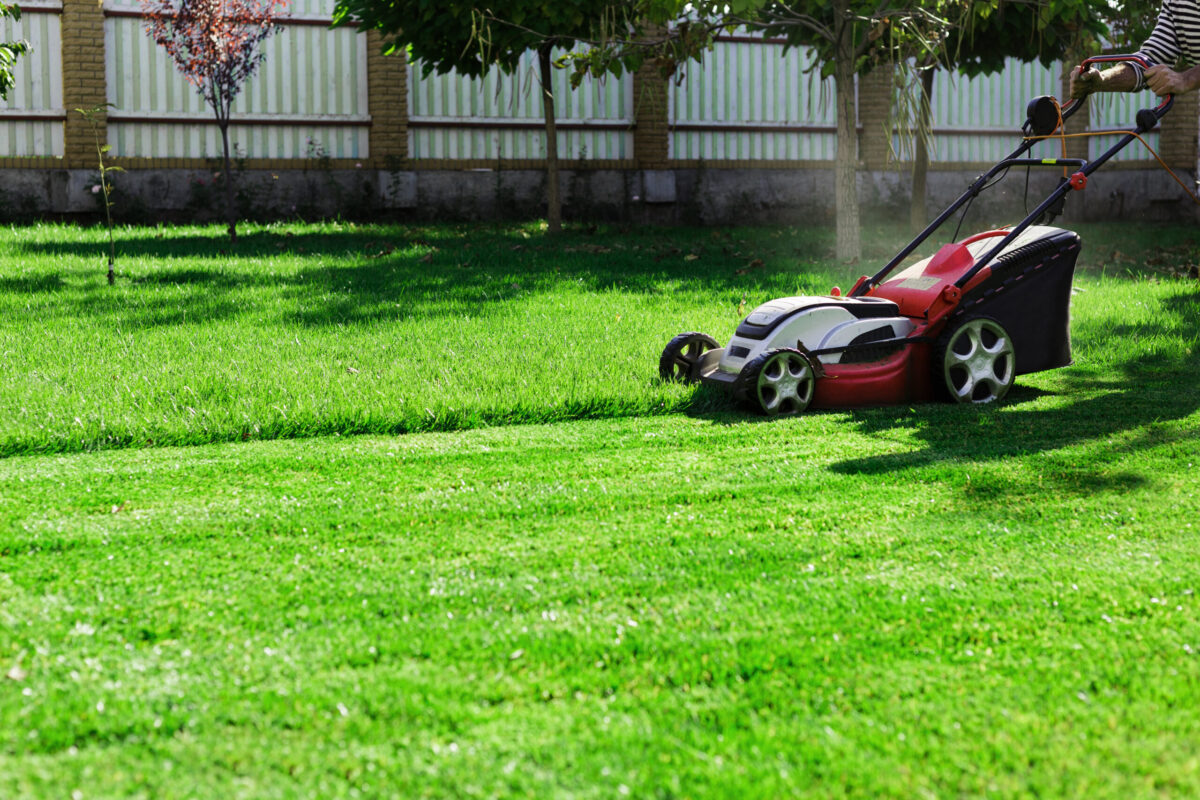
For most Wichita-area lawns, the answer is about once a week during the peak growing season, but the truth is that your grass doesn't follow a calendar. The right mowing frequency depends on the season, your grass type, the weather, and how fast your lawn is actually growing.
In other words, the best lawns aren't mowed on a fixed schedule. They're mowed when they need it. Below, we'll break down exactly how to know when that is, with guidance tailored to the grasses we grow here in south-central Kansas.
If you remember one thing from this article, make it this: never remove more than one-third of the grass blade's height in a single mowing.
Cutting more than a third at once shocks the plant. It stresses the roots and opens the door to weeds and disease, while leaving your lawn looking pale and patchy. When you stick to the one-third rule, your grass stays denser, greener, and far more drought-resistant.
Here's how the rule works in practice. If your ideal grass height is 3 inches, you should mow once it reaches about 4.5 inches, taking it back down to 3. When the grass is growing fast, that threshold comes up quickly, and you'll mow more often. When growth slows, you mow less. Think of it as if the grass is telling you what it needs.
Growth isn't steady year-round, so your mowing schedule shouldn't be either. Here's what a typical year looks like for a Wichita lawn.
This is prime growing season for cool-season grasses like tall fescue. Expect to mow once a week, and during a warm, wet stretch you may need to mow every 5 days to stay ahead of the one-third rule.
This is where it splits depending on your grass. Cool-season grasses slow down in the summer heat and may only need mowing every 7–10 days, and you should raise your mowing height to help them hold moisture. Warm-season grasses like Bermuda hit their stride in the heat and can need mowing once or twice a week.
Cool-season grasses come roaring back as temperatures drop, so you're back to a weekly rhythm. This is also the most important time of year for fescue health, so consistent mowing matters.
Growth largely stops. You may not mow at all, though an occasional cut to clean up leaves and even out the lawn can help.
Wichita sits in what turf experts call the transition zone. This is a band of the country where both cool-season and warm-season grasses are grown. That's why your neighbor's mowing schedule might look nothing like yours. Here's a quick guide to the grasses most common in our area.
Not sure what's growing in your yard? That's completely normal, and it's one of the first things our team identifies when we start service.
Even within the same grass type, a few things will speed up or slow down growth:
You're mowing too often if: the clippings are tiny, the lawn looks barely changed after a cut, or you notice tire ruts and stress in high-traffic spots. Constant mowing of grass that hasn't grown much just adds wear without benefit.
You're not mowing often enough if: you're cutting off way more than a third of the blade, the lawn looks scalped or yellow-brown after mowing, clippings clump in heavy rows, or weeds are starting to take over. Letting grass get too tall and then cutting it short is one of the most common causes of an unhealthy lawn.
How often you mow matters, but how you mow matters just as much. A few habits that make a big difference:
A healthy lawn rewards consistency, and consistency is hard to maintain when life gets busy, the summer heat sets in, or you'd simply rather spend your weekends doing something else.
That's where we come in. Four Star Lawn Care has been caring for Wichita lawns since 1989. Our professional team mows on a schedule built around how your specific grass actually grows, at the right height, in the right pattern, with sharp blades every time. We serve residential and commercial customers throughout Wichita and the surrounding communities. Get a free, personalized quote today or call us at (316) 832-9366.
